
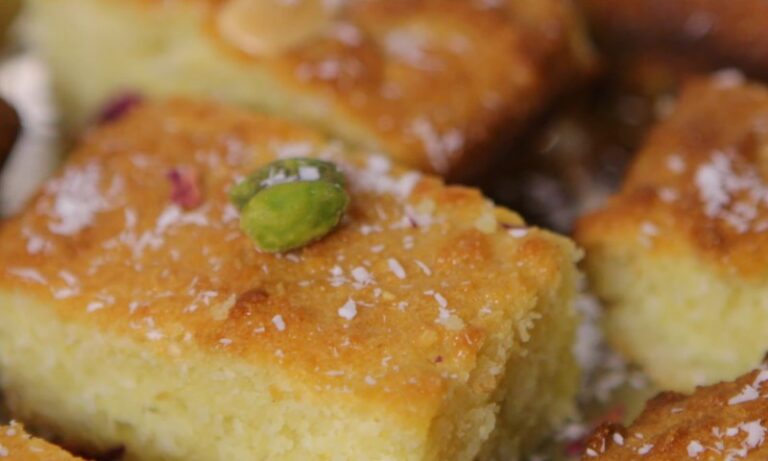
Imagine a sweet, moist cake that melts in your mouth. This is the magic of a classic Middle Eastern dessert. It is a semolina cake soaked in fragrant syrup.
The treat is a staple in many Arab homes. Families enjoy it during holidays and with daily coffee.
What makes this cake special? Yogurt gives it a tender crumb. A sweet syrup poured on top creates a sticky, delicious glaze. The balance of sugar and syrup is perfect.
You can make this beloved dessert in your own kitchen. Our guide uses simple, high-quality ingredients. We share tips for the perfect texture every time.
Ready to bake? Follow our steps for an authentic result. For more detail, explore this classic semolina cake recipe. Your family will love it.
Introduction to a Delicious Basbousa Adventure
This guide unlocks the secrets behind a timeless, syrup-soaked semolina cake. You will learn to create an authentic Middle Eastern dessert right at home.
The process is rewarding. Each step builds towards a perfect balance of sweetness and texture.
What Makes This Basbousa Special
This dessert captures a traditional essence with simple ingredients. Yogurt and semolina work together for a uniquely tender crumb.
Specific techniques prevent a rubbery texture. You achieve a moist cake that soaks up syrup beautifully.
| Feature | This Semolina Cake | Standard Cake |
|---|---|---|
| Primary Flour | Semolina | All-Purpose Flour |
| Key Moisture Agent | Yogurt | Milk or Buttermilk |
| Final Step | Soaked in Fragrant Syrup | Frosted or Plain |
| Texture | Dense, Moist, Sticky | Light, Fluffy, Dry |
Exploring the Origins of Basbousa
Every bite of this classic cake connects you to centuries of Middle Eastern culinary tradition. This sweet treat is more than just a dessert. It is a symbol of welcome and celebration shared across many cultures.
History and Cultural Significance
Its history is deeply woven into the region’s social fabric. Families serve it during holidays, weddings, and with daily coffee. This act reflects a long-standing tradition of generosity.
Understanding this context helps you appreciate why the dessert remains a staple. It is about community and sharing sweet moments.
| Country | Local Name | Notable Feature |
|---|---|---|
| Lebanon | Namoura | Often includes yogurt |
| Syria | Harisseh | Dense, syrup-soaked texture |
| Egypt | Basbousa | Famous melt-in-the-mouth feel |
Variations Across the Middle East
While the core of semolina and sugar is constant, regional recipes proudly differ. Some versions add shredded coconut for extra texture. Others use rose water or orange blossom water to scent the syrup.
The famous Egyptian version is known for its particularly tender crumb. These variations showcase each area’s unique culinary heritage. They all result in a beloved, sticky cake.
In Middle Eastern culture, offering sweets to guests is the first gesture of hospitality.
The synergy of correct oven settings and timely syrup application is key. It creates the signature soft interior and slightly crisp top of a perfect basbousa.
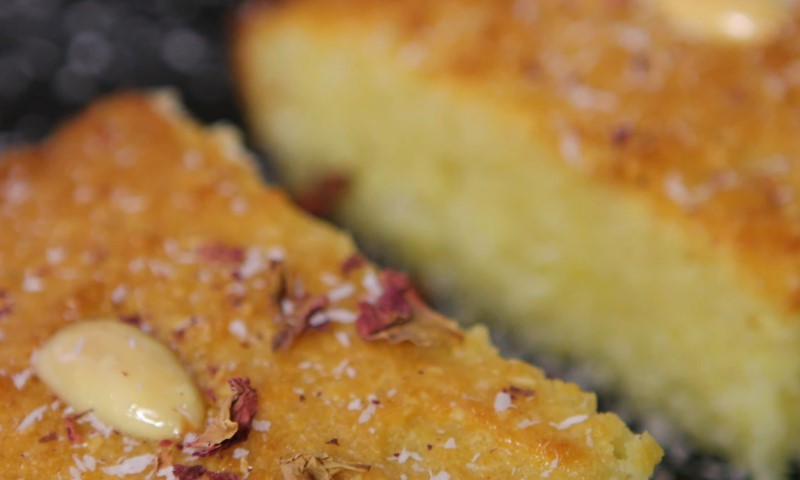
Basbousa Recipe With Yogurt, Soft Semolina Cake With Syrup
Ingredients
Equipment
Method
Step 1: Prepare the Batter
In a large bowl, combine semolina, sugar, flour, baking powder, and salt. Add melted butter or ghee and mix until the texture becomes sandy. Pour in the yogurt and gently mix until just combined—do not overmix.
Step 2: Prepare the Pan
Grease your baking pan with tahini. Spread the batter evenly into the pan, smoothing the surface.
Step 3: Rest the Batter
Let the batter rest in the pan for 1 hour. This allows the semolina to absorb moisture and ensures a soft texture.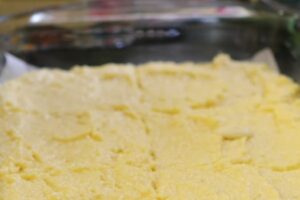
Step 4: Make the Syrup
In a saucepan, combine sugar and water. Bring to a boil, then add lemon juice. Simmer for 5–7 minutes. Remove from heat and stir in orange blossom water. Let it cool slightly.
Step 5: Score and Garnish
Before baking, score the batter into diamond or square shapes using a knife. Place an almond or nut in the center of each piece.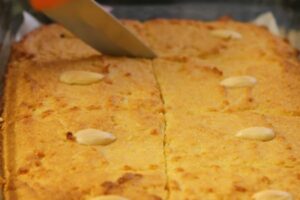
Step 6: Bake & Add Syrup
Preheat oven to 350°F (180°C). Bake for 18–22 minutes until golden brown.Immediately pour the syrup over the hot cake. Re-trace the cuts to help absorption. Allow the cake to fully soak and cool before serving.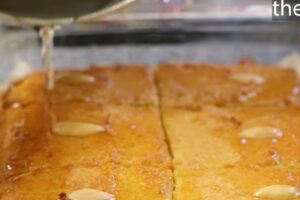
Video
Notes
Cooking Tips
- Coat semolina thoroughly with butter for a crumbly texture.
- Avoid overmixing after adding yogurt to prevent toughness.
- Resting the batter is essential for proper hydration.
- Pour syrup while cake is hot for maximum absorption.
- Use room-temperature ingredients for better consistency.
Enhancing Flavor with Syrups and Garnishes
The final flourish of syrup and garnishes transforms your baked semolina cake into a masterpiece. These elements add layers of aroma, sweetness, and texture.
They turn a simple dessert into an unforgettable experience. Your choices here make the recipe uniquely yours.
Choosing Between Lemon Juice, Orange Blossom or Rose Water
The syrup is the soul of this dessert. A splash of lemon juice cuts the sweetness of the sugar perfectly.
It brings a bright, citrus note. For a traditional floral aroma, choose orange blossom water or rose water.
Both are authentic and fragrant. Add them after you remove the syrup from the heat to preserve their delicate flavor.
When you bring the syrup to a boil in a small saucepan, ensure all the sugar dissolves. This prevents crystallization for a smooth texture.
| Flavoring | Primary Role | Ideal Use | Note |
|---|---|---|---|
| Lemon Juice | Balances sweetness | All-purpose, adds brightness | Add during the boil |
| Orange Blossom Water | Adds floral aroma | Classic Middle Eastern style | Stir in after removing from heat |
| Rose Water | Provides delicate perfume | For a fragrant, romantic twist | Use sparingly, very potent |
| Coconut (flakes or milk) | Adds subtle flavor & texture | Popular in some regional variations | Pairs wonderfully with semolina and yogurt |
Creative Nut and Garnish Options
Garnishing the top with nuts adds necessary crunch. Almonds, pistachios, or pine nuts are classic choices.
They elevate the overall eating experience. The fat from butter or ghee in the cake carries these flavors beautifully.
Coconut is another popular addition. It provides a subtle flavor dimension that complements the other ingredients.
Experimenting with different nuts lets you customize each batch. For a decadent twist, try a creamy basbousa variation. It combines rich texture with these crunchy, flavorful toppings.
Serving Suggestions and Storage Ideas
Your beautiful semolina cake deserves an equally beautiful presentation. The final touches make it special for any gathering.
How to Present a Beautiful Basbousa
Serve your dessert in the diamond-shaped pieces you scored before baking. This classic look is instantly recognizable.
Let the syrup soak in fully for that signature melt-in-your-mouth quality. A simple garnish of almonds or other nuts on top adds a professional touch.
The protein in the yogurt helps each piece hold its shape perfectly. You can easily lift them from the pan.
Best Practices for Storing Your Cake
Keep your cake fresh by storing it in an airtight container at room temperature. It will stay moist and delicious for up to a week.
If your kitchen is warm or you used coconut, refrigeration is a good idea. The flavors often blend and improve after the first day.
Proper storage ensures you can enjoy every last piece of this sweet treat.
FAQ
Conclusion
Baking this iconic dessert is a delightful way to bring a taste of Middle Eastern hospitality to your table. Mastering this recipe connects you to a rich culinary tradition. It is a rewarding journey for any home baker.
The secret lies in your technique. Use high-quality coarse semolina for the best texture. Let your batter rest for the full hour before it goes into the oven.
Your syrup is just as important. Balance the sugar with a splash of lemon juice or floral water. Pour it over the hot cake for perfect absorption.
This versatile treat welcomes your personal touch. Top it with almonds, pistachios, or even shredded coconut. Each batch you make will improve your skill.
We hope you enjoy sharing this sweet, syrup-soaked cake. Happy baking!